
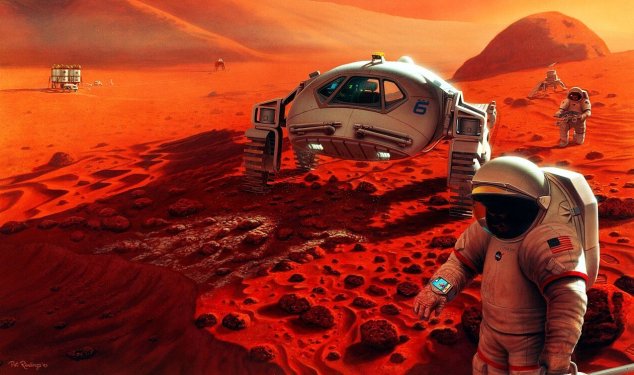
Getting to Mars is, frankly, a bit of a commitment.
Even under ideal conditions—perfect planetary alignment, optimal launch timing, everything going right—a trip to the Red Planet still takes somewhere between five and eleven months. For astronauts, that’s a long stretch of staring out a window at space, especially compared to the relatively quick few-day hop to the Moon.
But what if the problem isn’t the technology… it’s the route?
A new study from cosmologist Marcelo de Oliveira suggests there may be a faster way to get to Mars—not by building better engines, but by getting smarter about how spacecraft move through space in the first place.
Let Gravity Do the Work
Space travel isn’t as simple as pointing a rocket at Mars and hitting “go.” Spacecraft follow curved paths shaped by gravity, constantly influenced by planets, moons, and anything else with enough mass to tug on them.
That means timing is everything.
By carefully choosing when to launch—and more importantly, how to travel—it may be possible to shave significant time off the journey. Think of it less like a straight road trip and more like threading your way through a series of invisible currents.
The Asteroid Assist
One of the more intriguing ideas involves using asteroids as gravitational assists.
Instead of burning extra fuel, a spacecraft could pass near an asteroid and use its gravity to subtly tweak its speed and direction. It’s the same principle NASA has used with planets for decades, just on a smaller (and slightly trickier) scale.
Individually, these adjustments are minor. But combined with a carefully planned trajectory, they could add up to a noticeably faster trip to Mars.

Faster, But Not Easier
According to the study, an especially well-optimized route could cut months off the journey.
The tradeoff? Complexity.
These routes would require incredibly precise navigation, careful timing, and a lot of planning. One wrong move, and your “shortcut” through space could turn into a very long detour.
Still, the idea is appealing.
Because if scientists can make Mars missions faster using the physics we already understand, it could bring human travel to the Red Planet one step closer—no futuristic engines required.
Just a better sense of direction.



Leave feedback about this